
The Stinson 108 wing design is derived from the National Advisory Committee for Aeronautics (NACA) 4412 airfoil, a common airfoil profile used in many civil aircraft of the same era, including the Aeronca Chief, Luscombe Model 8, Funk Model B, Grumman Ag Cat, and Citabria, among others.
A notable difference between the Stinson wing and the standard NACA 4412 profile is that the Stinson’s lower wing surface is flat—similar to the Clark Y airfoil—whereas the 4412 features a slight curvature on the underside.
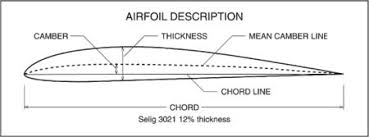
The “4412” designation refers to the geometric characteristics of the airfoil:
Last two digits (12) – Indicate the maximum airfoil thickness is 12% of the chord length.
First digit (4) – Indicates the maximum camber is 4% of the chord length (the chord being the straight-line distance from the leading edge to the trailing edge).
Second digit (4) – Indicates the location of maximum camber is at 40% of the chord length, measured from the leading edge.

Why the wing slot?
The wing slots (not slats) on the Stinson 108-2 are fixed, partial-span features located at the leading edge of the outer wing section, directly in front of the ailerons. These slots allow high-energy airflow from beneath the wing to pass through and energize the boundary layer over the upper surface, maintaining attached flow and providing continued lift and aileron authority at elevated angles of attack.
During a stall, the wing root typically separates first, resulting in docile handling characteristics. The slots ensure that airflow remains attached over the outer wing and ailerons, enabling the pilot to retain lateral control even as the inner wing stalls.
Unlike flaps, which increase the maximum lift coefficient by altering wing camber, these leading-edge slots do not directly modify the airfoil’s camber. Instead, they delay boundary-layer separation, effectively increasing the stall angle of attack from a typical 15 degrees to approximately 20–25 degrees. The combination of partial-span flaps and these partial-span slots contributes to the aircraft’s benign stall behavior.

While beneficial for low-speed performance, the slots introduce a drag penalty at higher speeds, which reduces the aircraft’s maximum speed and increases fuel consumption. However, as partial-span devices, they minimize this drag compared to full-span alternatives, representing an acceptable trade-off between cruise performance (e.g., Vno) and stall speed (e.g., Vso).
1 Vno, Maximum speed for normal operations
2 Vso, Stall speed or minimum flight speed in landing configuration
So why have them? Well, the extra drag at higher speeds is an acceptable trade-off because of the reduction in stall speed and the better handling at lower speeds.
NACA Video on Slots
Jeff
 Stinson Station Wagon, NC9391K Restoration