This unit is a lot cheaper than the Bendix/King KI 300, and it fits nicely in the turn and bank hole with no modifications. It goes for $1,995.00 while the Bendix/King KI -300 lists for $3,950.00. The AV-30 also provides for heading indication on the artificial horizon display.
There’s a lot of history behind this indicator. It was originally developed by Sandia Aerospace as the SAI-340 Quattro, a four-in-one standby instrument that gives you precision Airspeed, Attitude, Altitude and Slip indications, all in an easy to read EFIS presentation. It can also be an excellent safety enhancing addition to your traditional six pack panel. Bendix/King bought the rights to the unit and have marketed it as the Bendix/King KI-300.
Soon after the indicator hit the market, the FAA issued Emergency Airworthiness Directive 2020-18-51, because in their words,
“This emergency AD was prompted by a report of three failed attitude indicator P/N 306171-10 units. Following the initial report, investigation has revealed a total of 54 failed attitude indicator P/N 306171-10 units. Attitude indicator P/N 306171-20 is affected by the same unsafe condition because it is identical to P/N 306171-10. The effect of the failure was erroneous attitude data provided to the pilot and autopilot, if equipped. In some instances, the pilot is unaware that the data is erroneous or unreliable. In other instances, where the aircraft is equipped with multiple displays, the pilot may be provided with conflicting information, but will have no way to determine which display contains the correct data. This condition, if not addressed, could result in aeronautical decision-making based on erroneous attitude information, which may result in loss of control of the aircraft.“
The AD basically states you can’t couple it to an autopilot and you can’t fly IFR, or use it for Night VFR. With no autopilot and no IFR panel, I only need to be concerned with the night VFR limitation. I’m installing it as a reference indicator as I’m keeping the factory original setup for the panel, so it’s not the primary indicator.
The unit would be installed IAW FAA Policy Statement PS-ACE-23-08-R1 Replacement of Vacuum Driven Attitude Indicators in 14 CFR part 23/CAR 3 Airplanes. This document allows for the installation of a replacement vacuum driven gyro with this indicator in the panel slot where the original indicator was removed. This Stinson didn’t have a vacuum driven gyro at the time of manufacture, but a complete system was installed by FAA Form 337 on August 12, 1947. So it will need to go where the turn coordinator is located and the turn coordinator will go to the upper left position if I want to keep it.
Reading further and still on the turn coordinator subject, the FAA released FAA Advisory Circular AC-91-75 which provides the rational for removing the turn coordinator completely from the panel. Their reasoning is:
“Replacing the rate-of-turn indicator will mean losing an easy reference for standard rate turns. However, in today’s air traffic control system, there is little need for precisely measured standard rate turns or timed turns based on standard rate. Maintaining a given bank angle on the attitude indicator for a given speed will result in a standard rate turn. Pilots using this AC to substitute an attitude indicator for their rate-of-turn indicator are encouraged to know the bank angle needed for a standard rate turn.”
All this hinges on my decision to actually install the indicator. I think it will be beneficial to have it in the Stinson as a backup indicator for all the analog indicators.
These little indicators are becoming very affordable. There’s so much going on with this instrument as it displays attitude, airspeed, altitude, verticals speed, turn and slip, all your airspeed V numbers, an altitude select mode, all in a self contained unit with a battery backup. I believe I will replace the electric turn and bank with one of these.
This indicator is just ‘on loan’ from work to see if it would work.
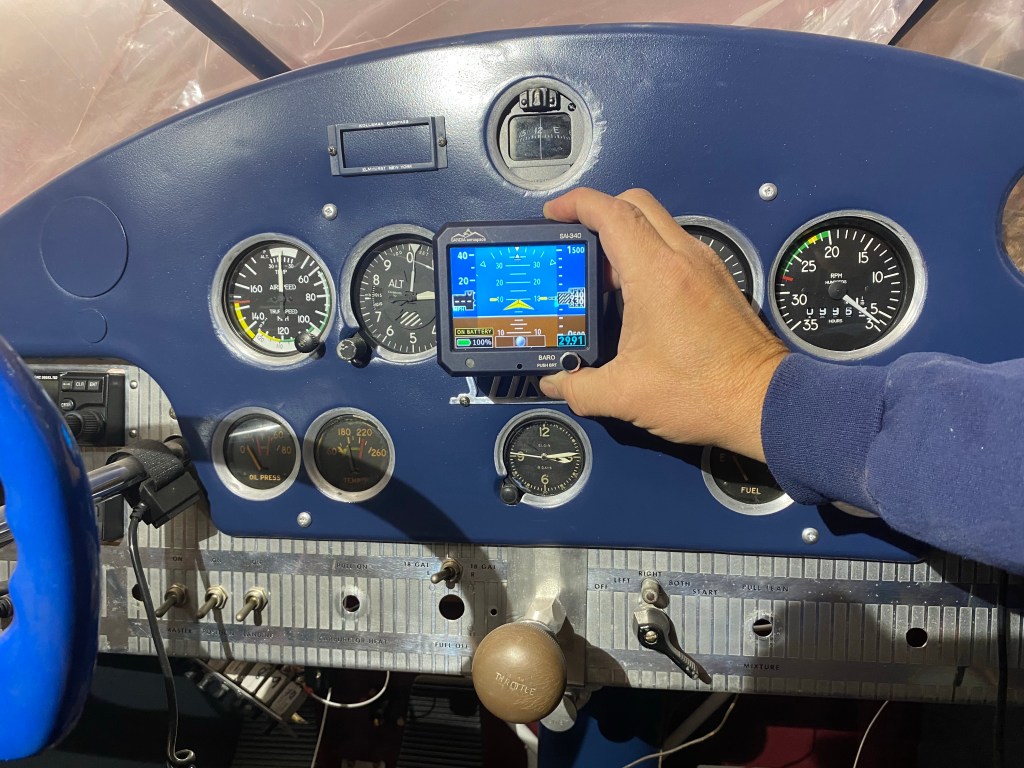
It fits in a regulate 3 1/8” instrument hole, but the Stinson panel overlay would need to be modified to fit the square face.
I could leave the electric turn coordinator installed and mount this in the upper left corner of the panel.
Holding it up to the panel. It’s running on batteries in this photo. The indicator in a test panel and an extra overlay I have. It would need to be modded some to use it. The Bendix/King KI-300
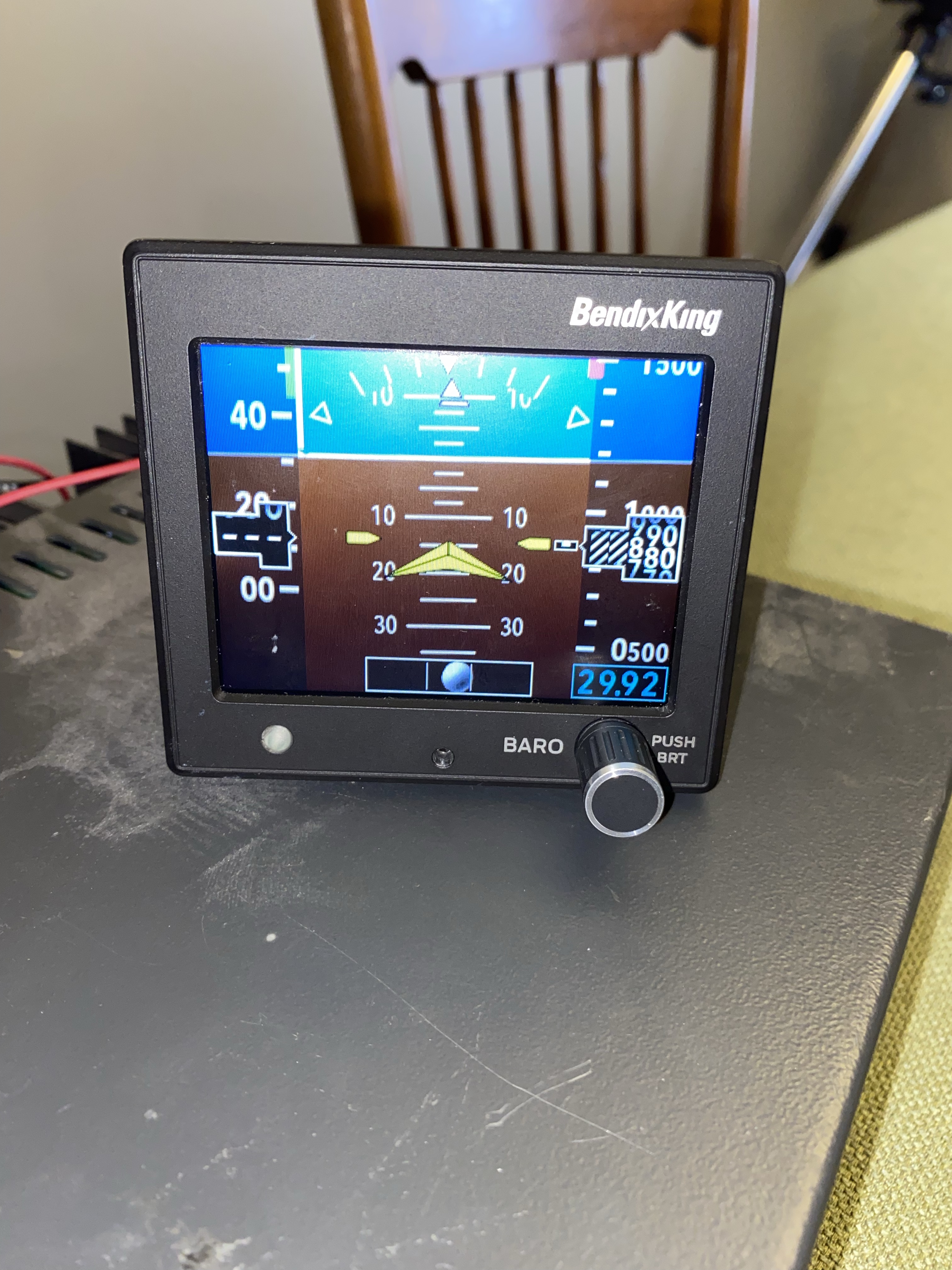
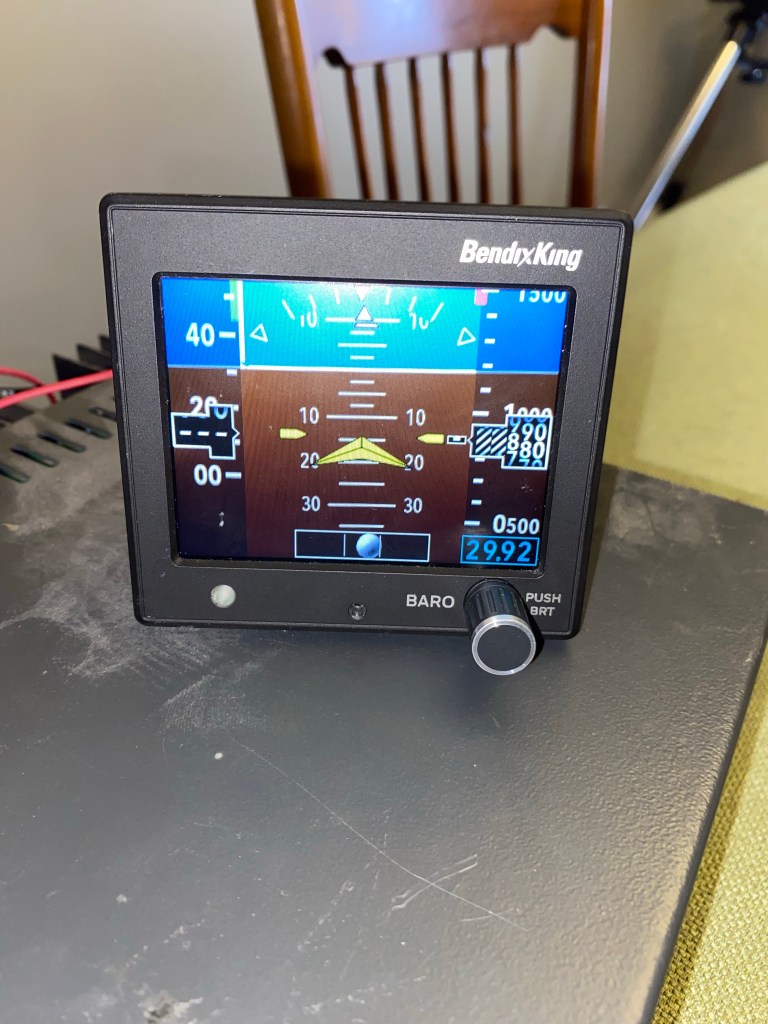
The first photos show the Sandia SAI-340 version, which was later purchased by Bendix/King and is now the KI-300. I now have the KI-300. If you compare the photos you’ll see the difference. The FAA has an emergency AD notice in these indicators and they can’t be used for IFR or night VFR, but otherwise no limitations. I’m only using it as a reference anyway so it doesn’t matter.
I’m still deciding on which spot to put it. Either way it’ll change the clean look of the original panel. Not something I really want to do.
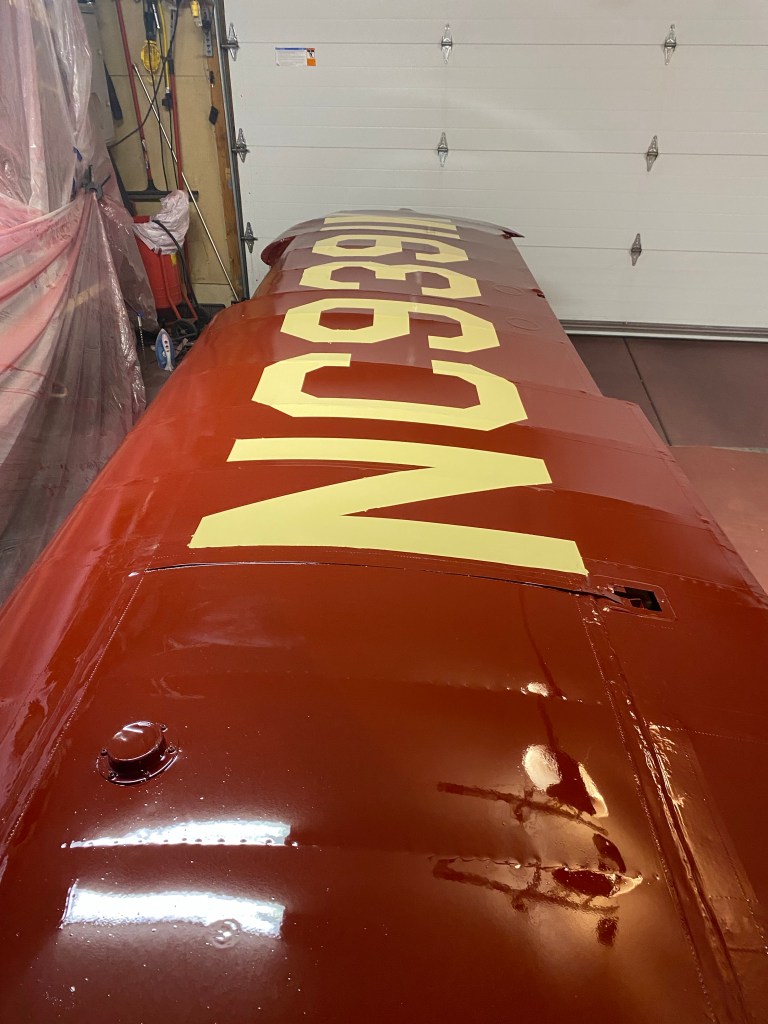
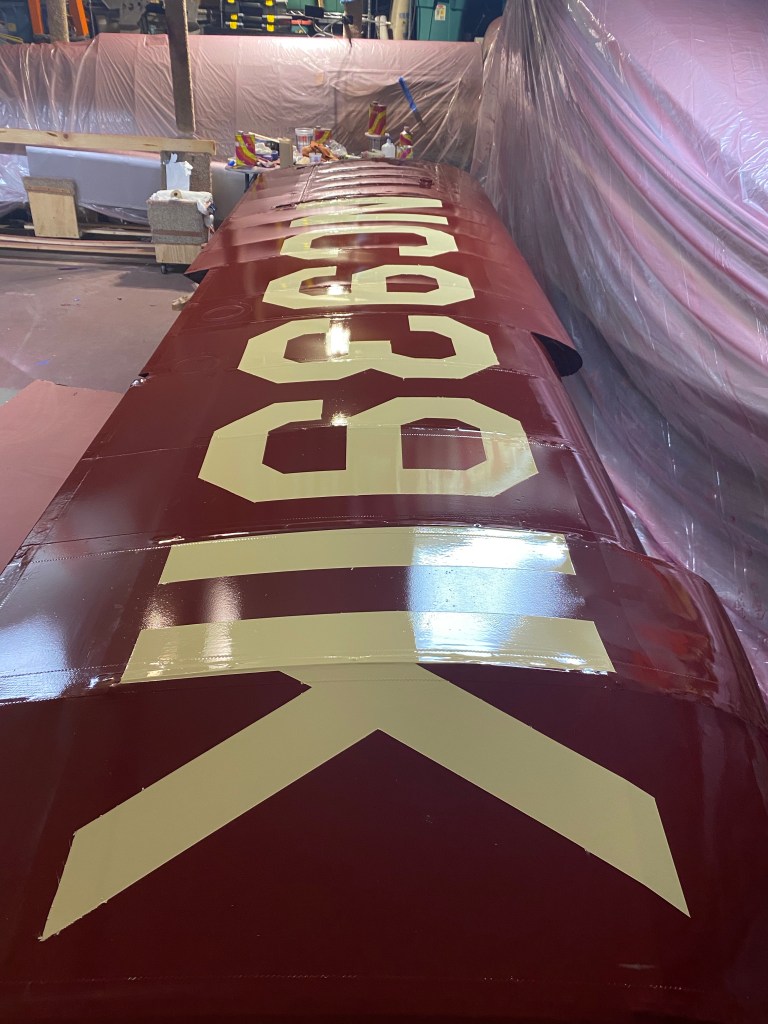
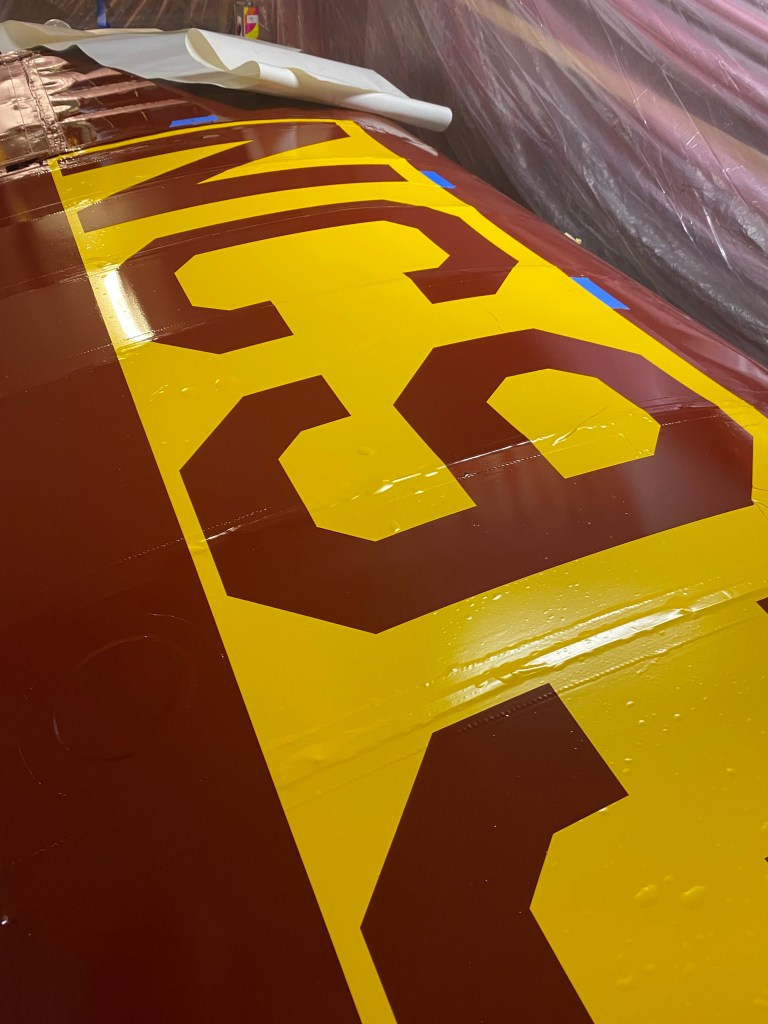
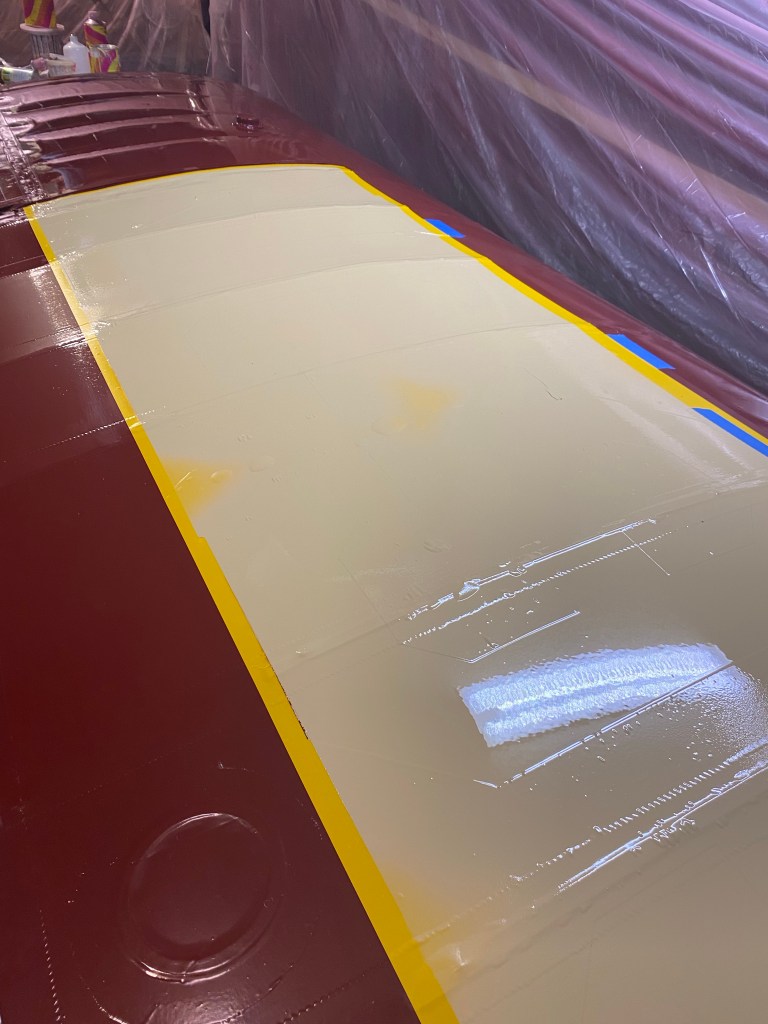
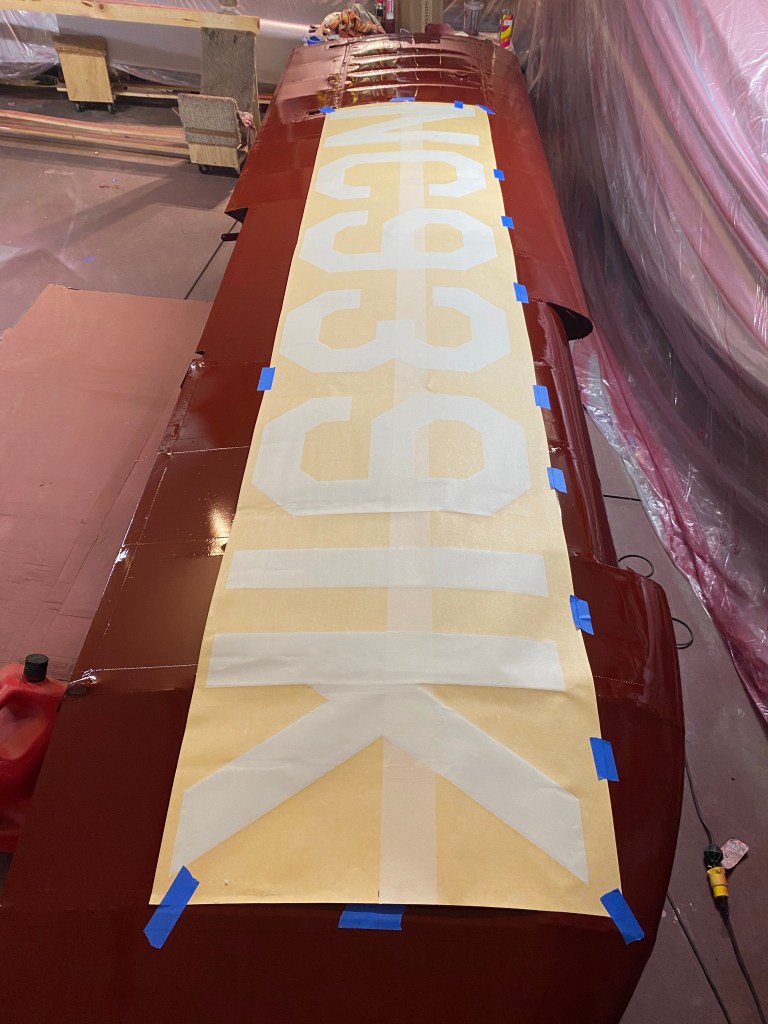
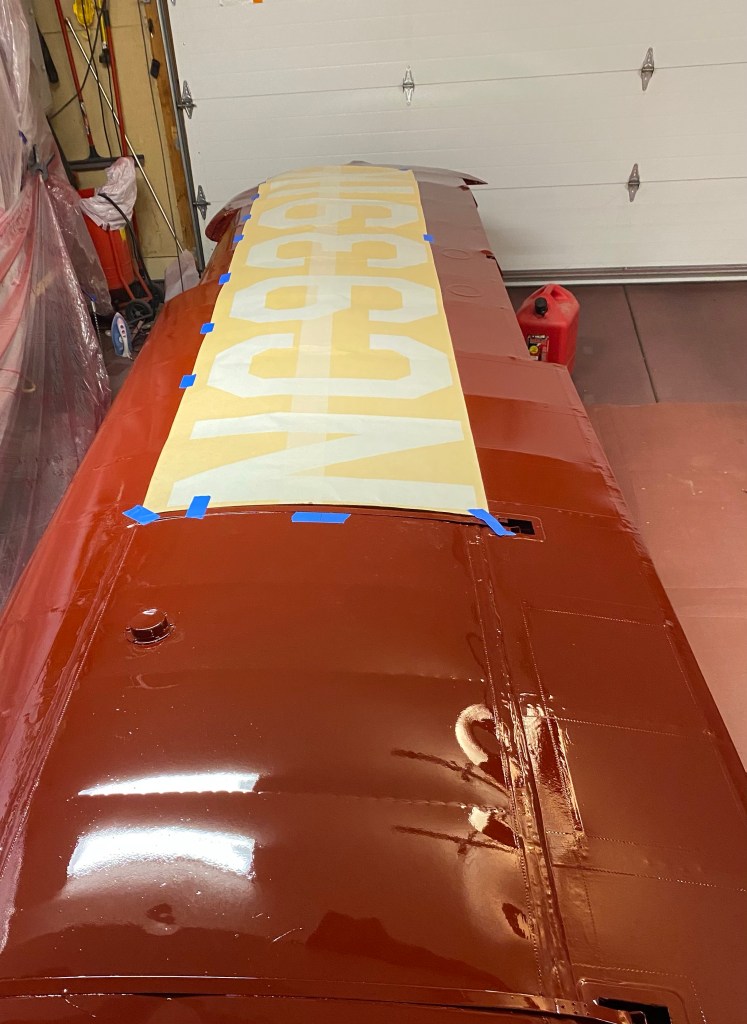
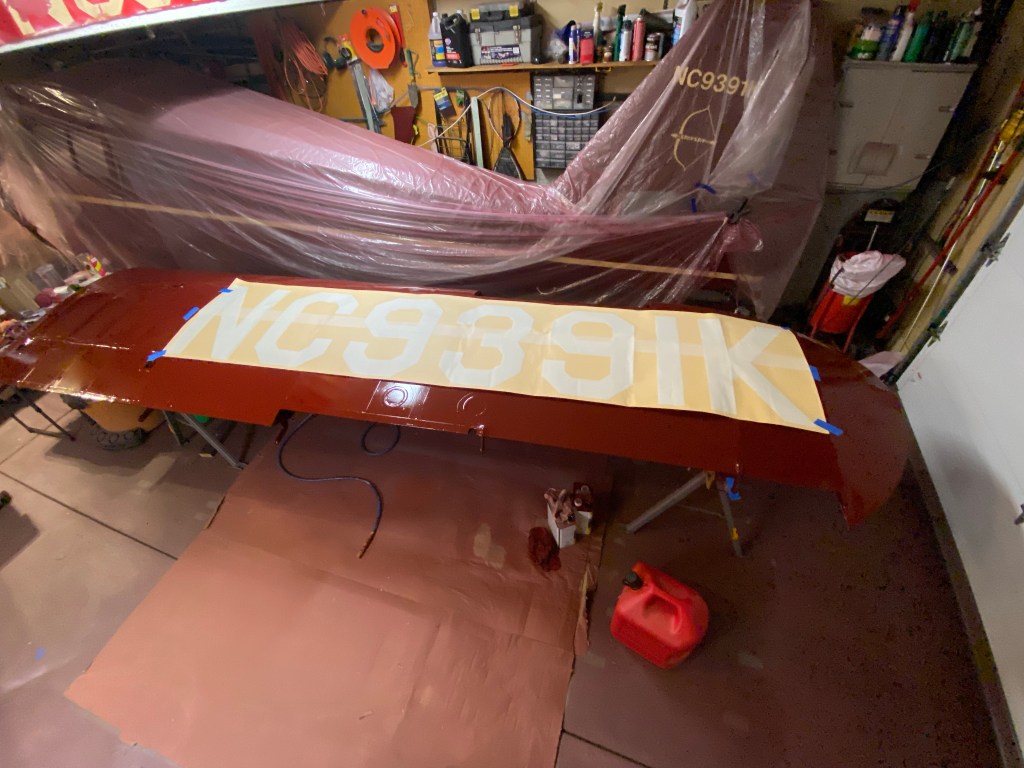
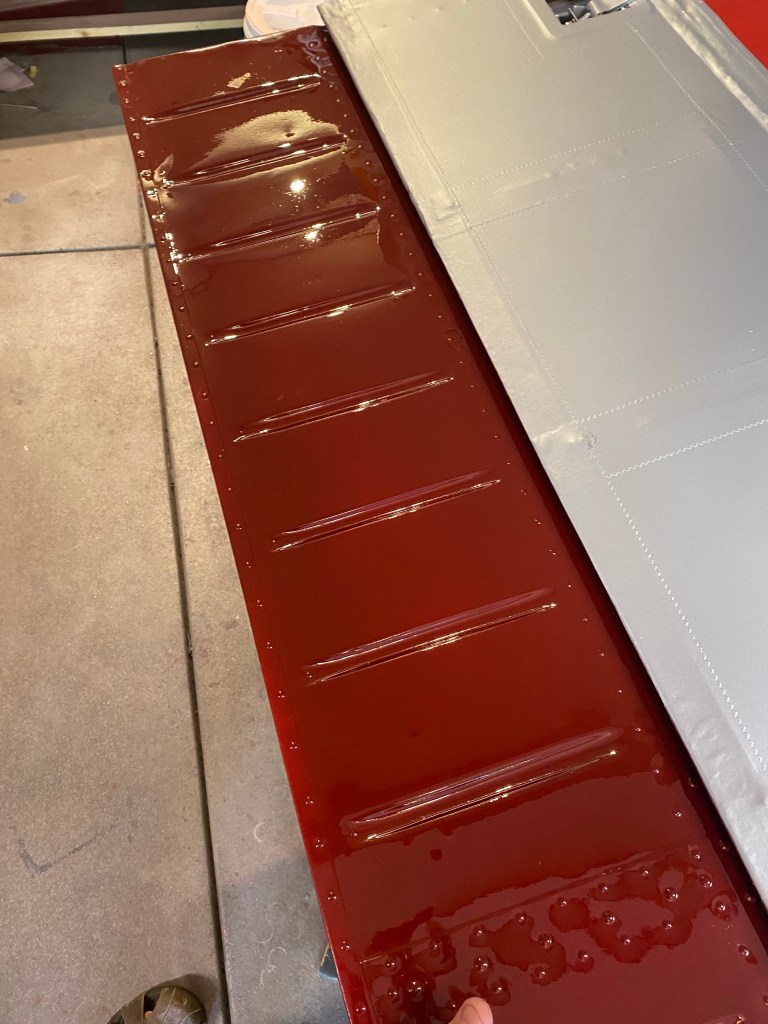
Putting down the stencil on a non flat surface and trying to keep it straight was not easy. I also wanted to keep the registration number off the fuel tank. I have some edges to clean up, but it doesn’t look too bad.
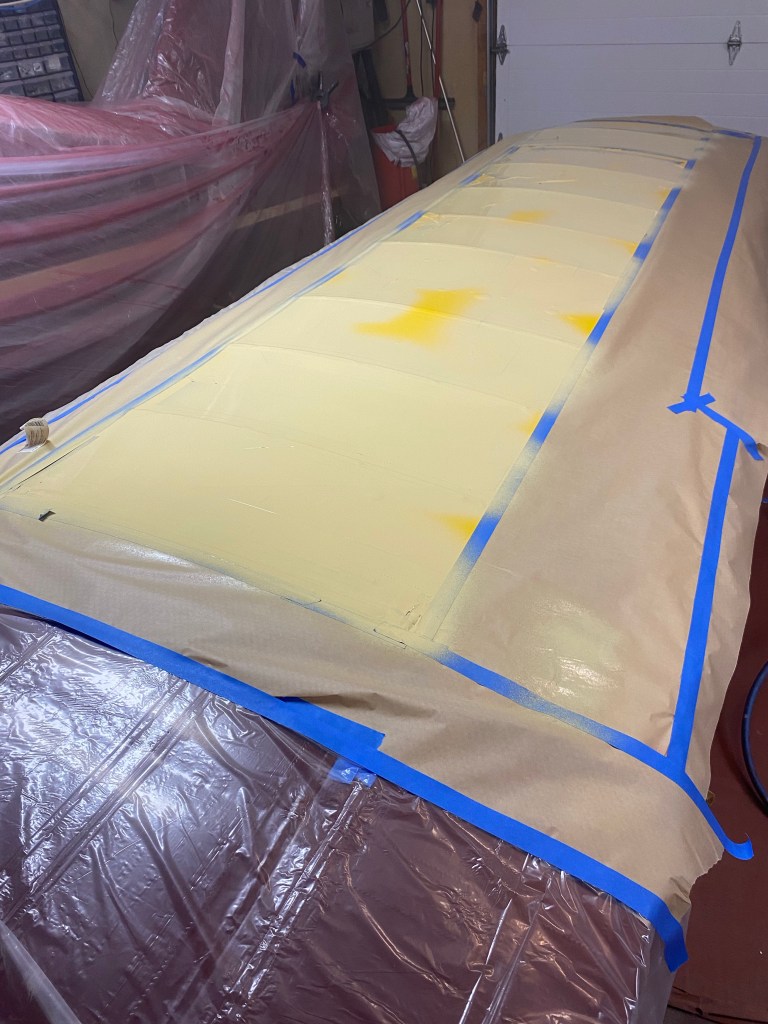
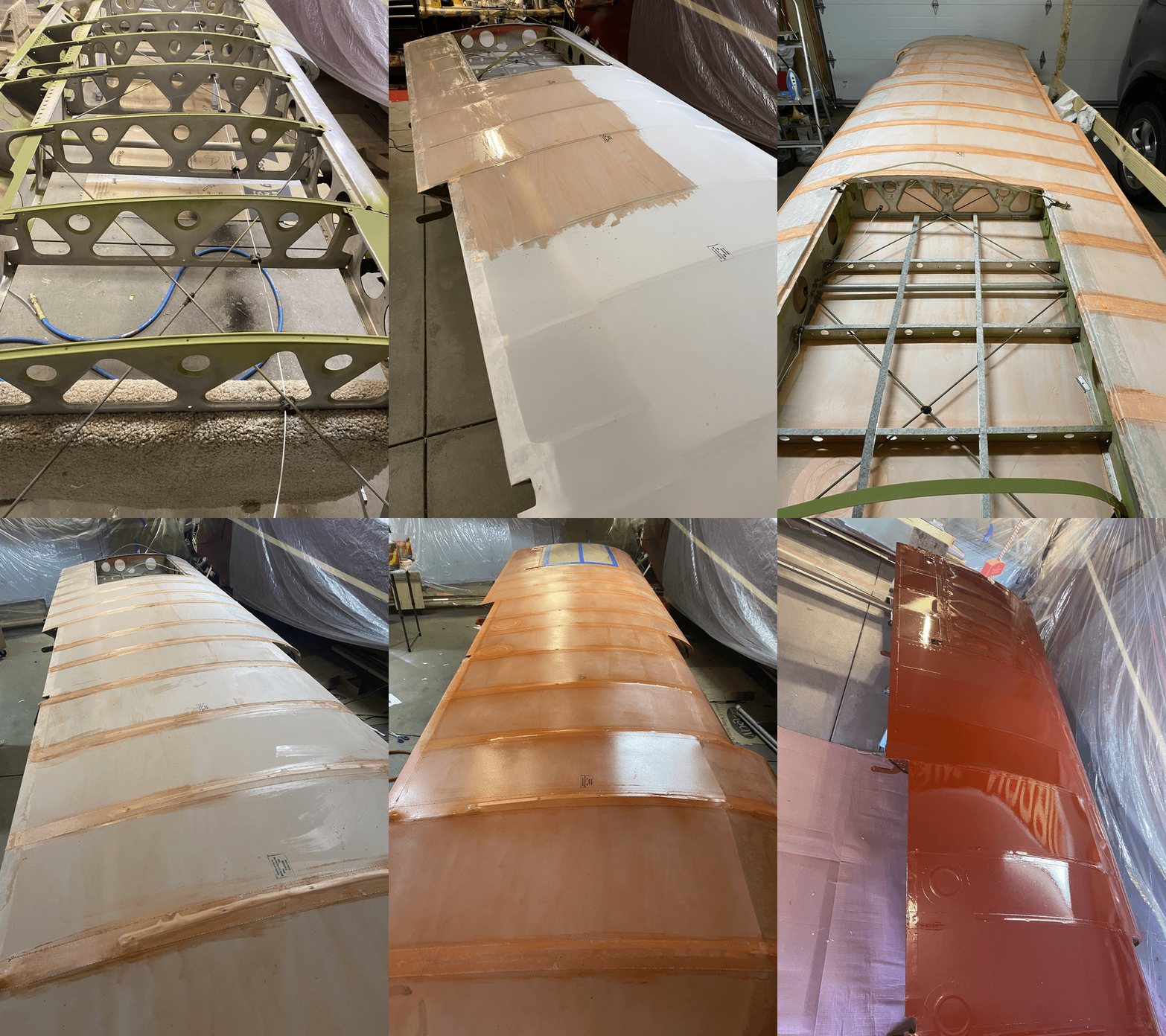
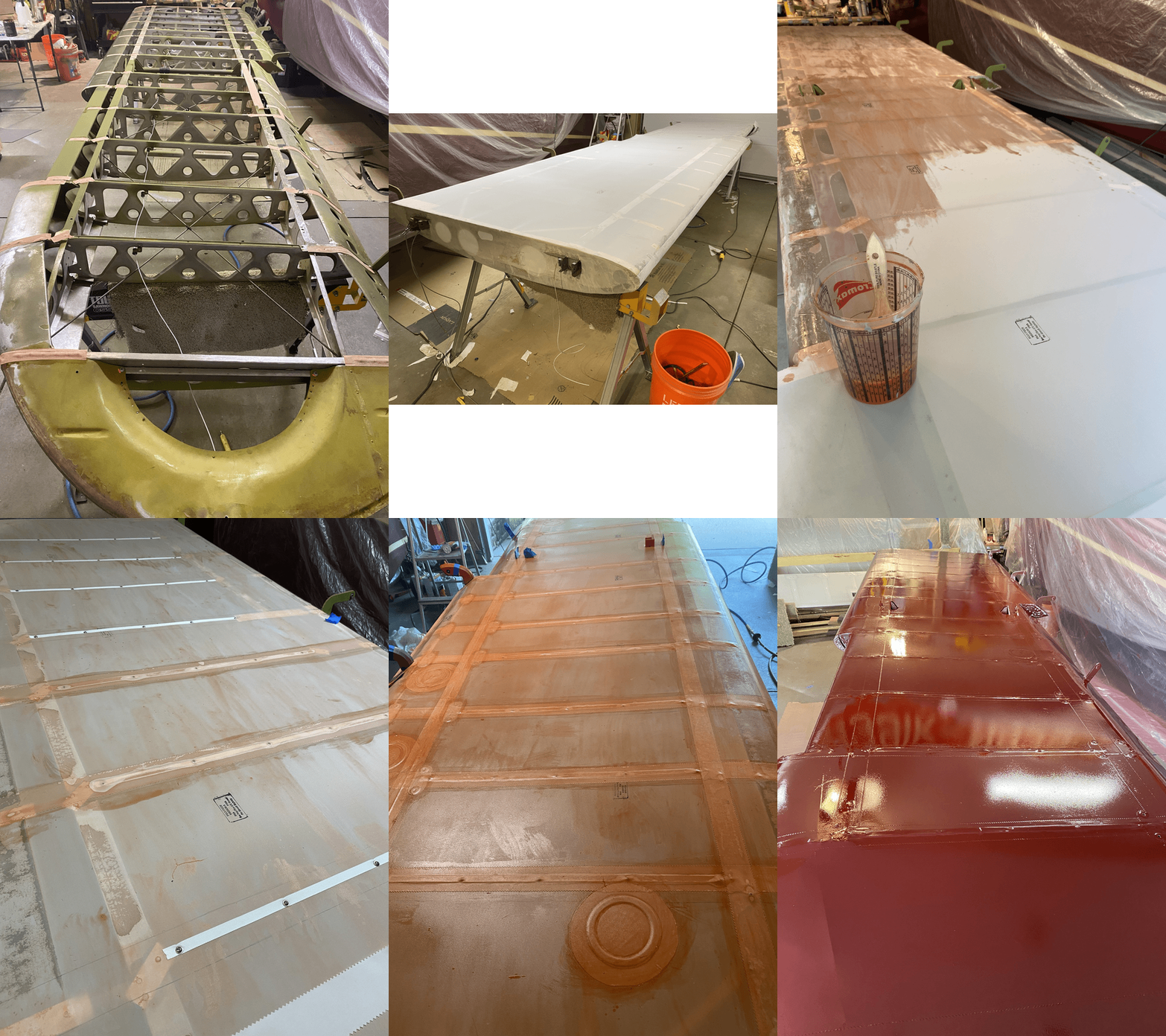
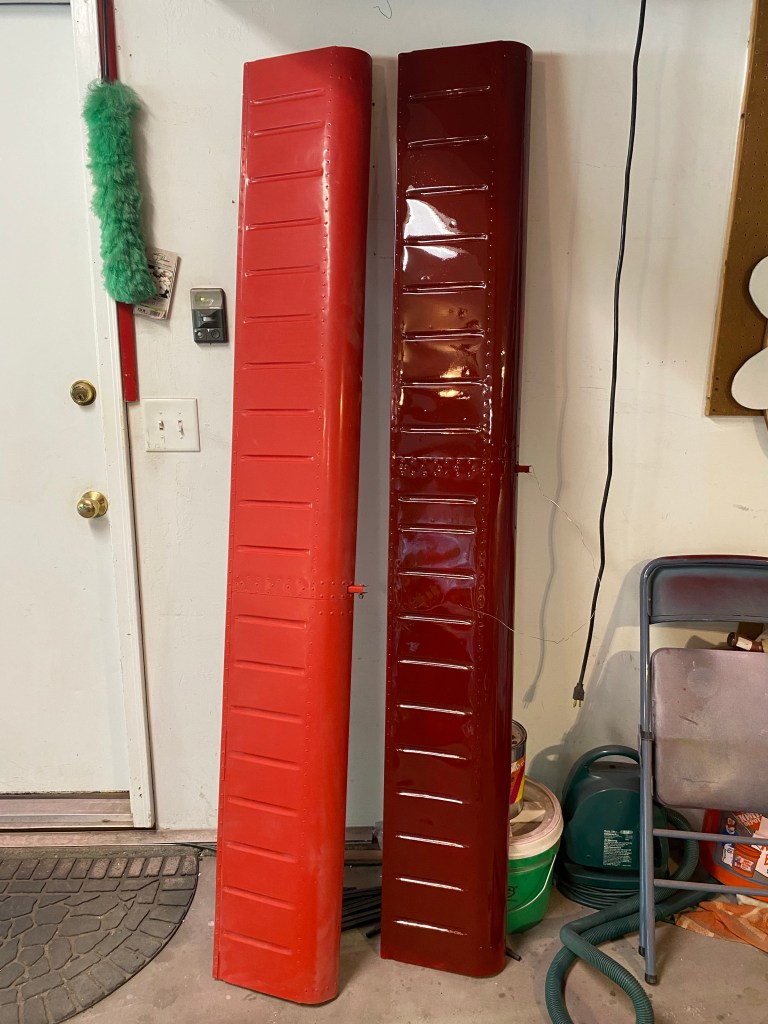
Now I get to start the whole painting process over on the port wing.





 Stinson Station Wagon, NC9391K Restoration