
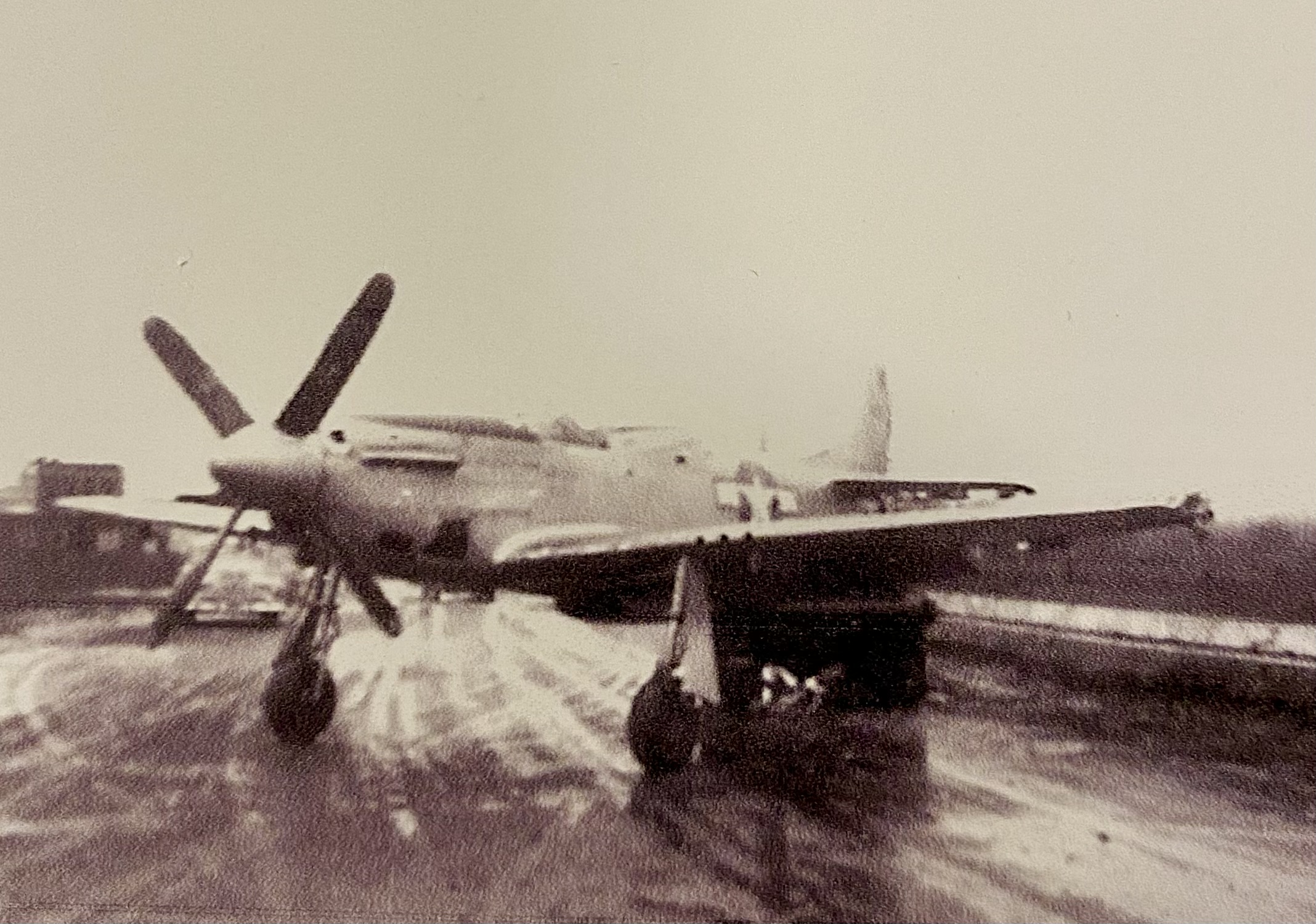
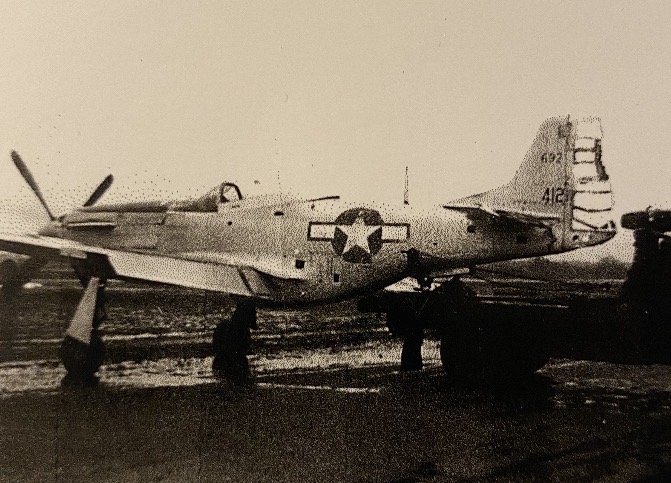
A while back I was texting Scott Horton, son of Frank Horton, who said his family owned a P-51 Mustang at one time. He sent me photos of it which I’ve posted below. After some hunting I found the Aircraft Record Card and an Accident Report for it after verifying the serial number of the airplane.
There’s a history of it at the bottom of this page.
Here is the Aircraft Record Card:
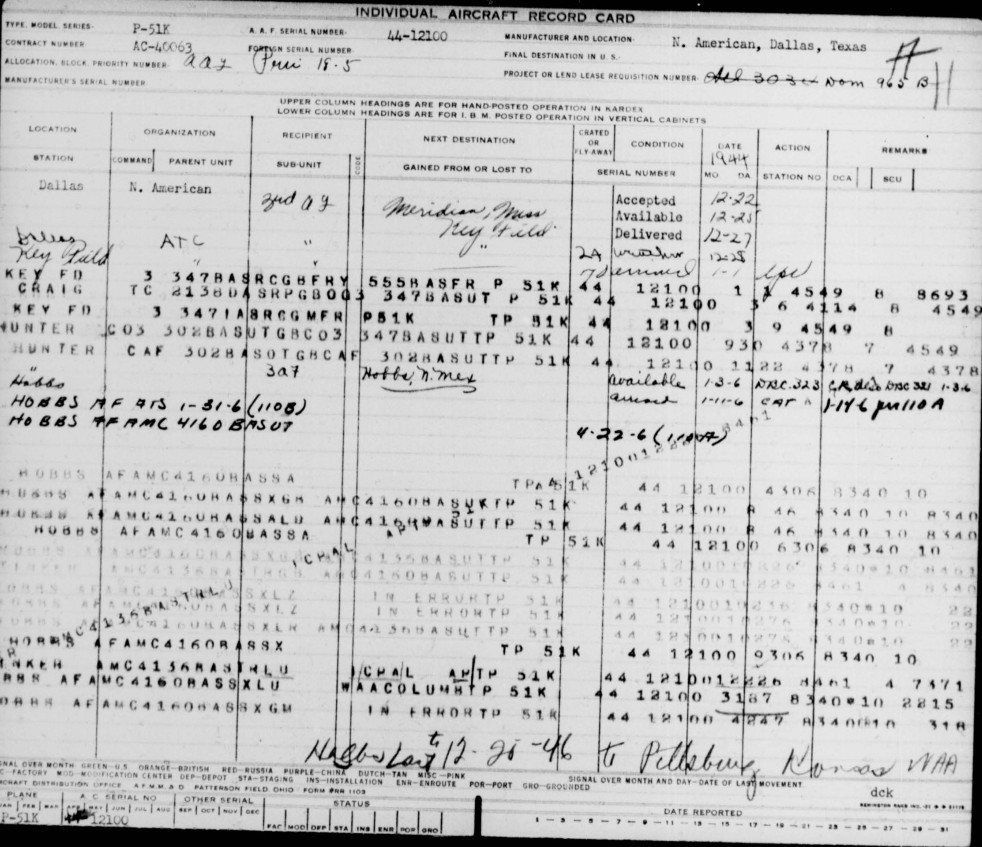
He stated that Uncle John flew the Mustang at some point. It was given to the City of Pittsburg Kansas as a display in a park. Scott says it was on display in a park in Pittsburg, Kansas. Years later, guessing in the early 1950’s, the Horton’s purchased it. No verification of a bill of sale has been located yet.
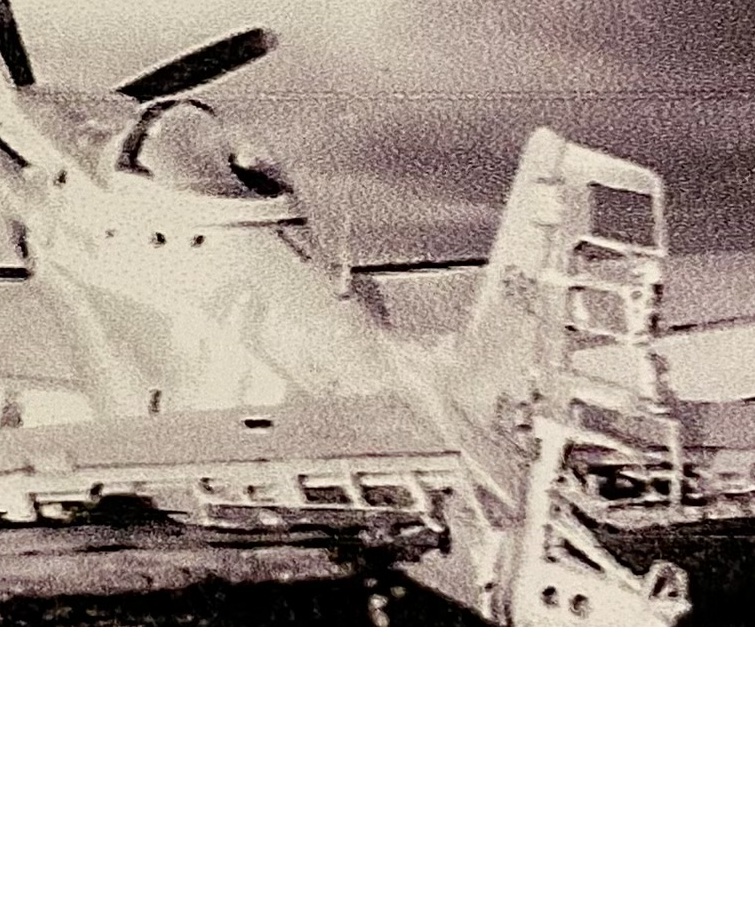
The pictures are from when it was received by the city through the damage and the recovery from the park by the Horton’s. You can see their tow truck in one photo as well as the rope around the rear of the aircraft used for towing.
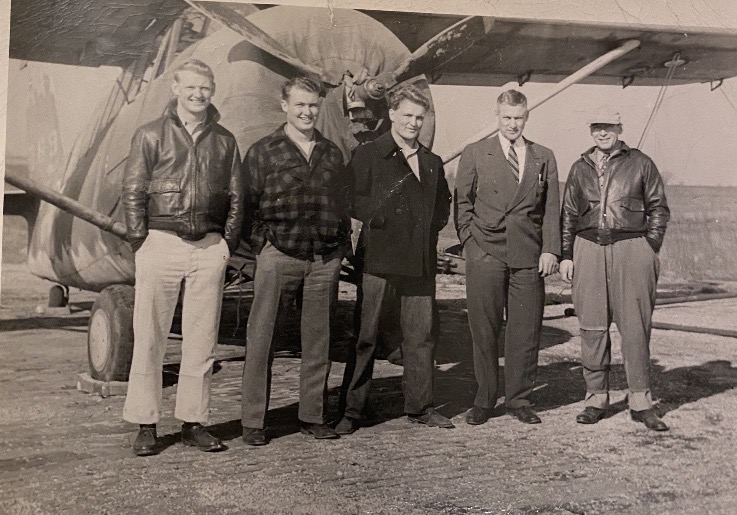
The Horton’s also owned several other aircraft. One was a Curtiss O-52 Owl, which still exists today at the Yanks Air Museum in Chino, CA. I’ve attached a photo at the very end of the Owl.
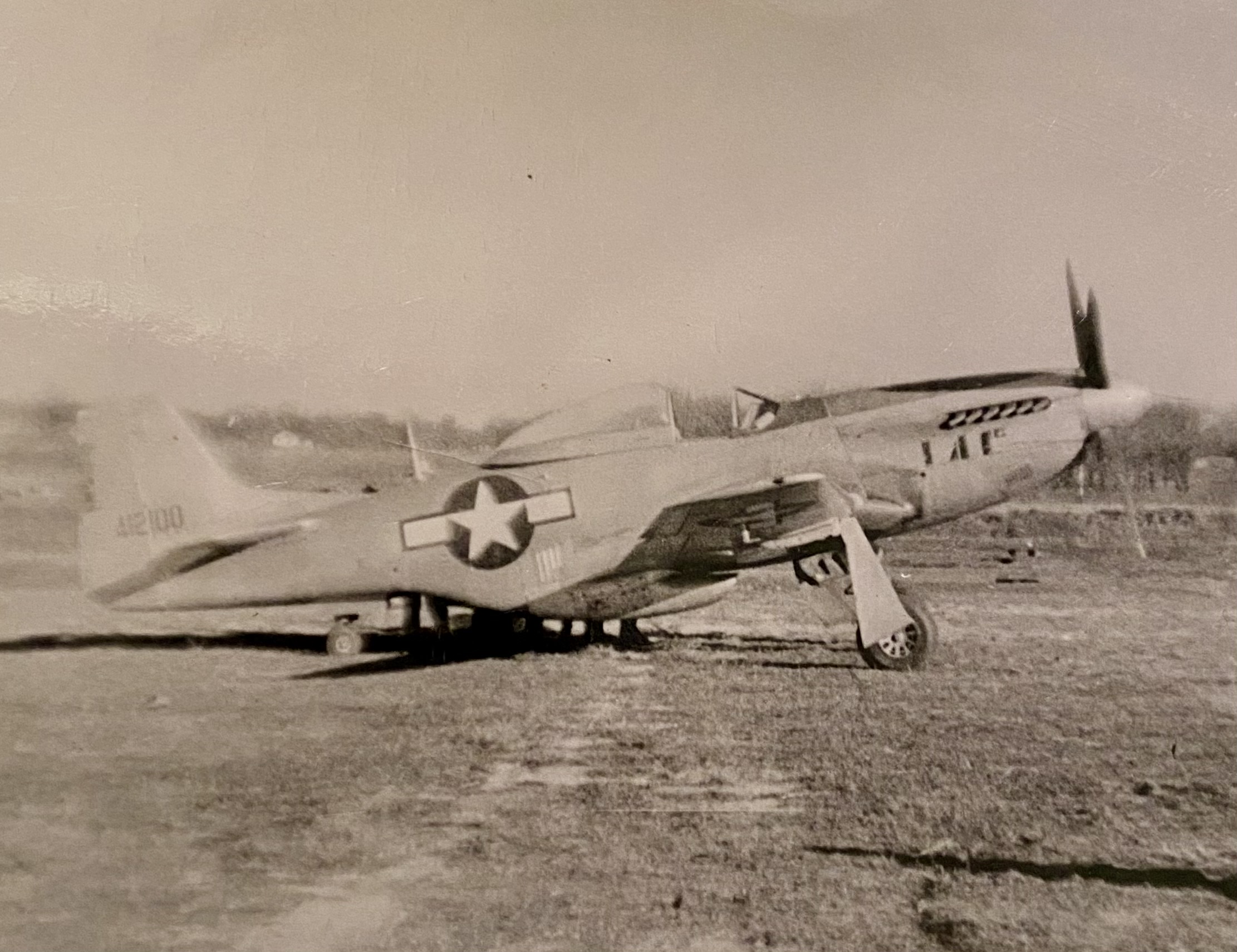
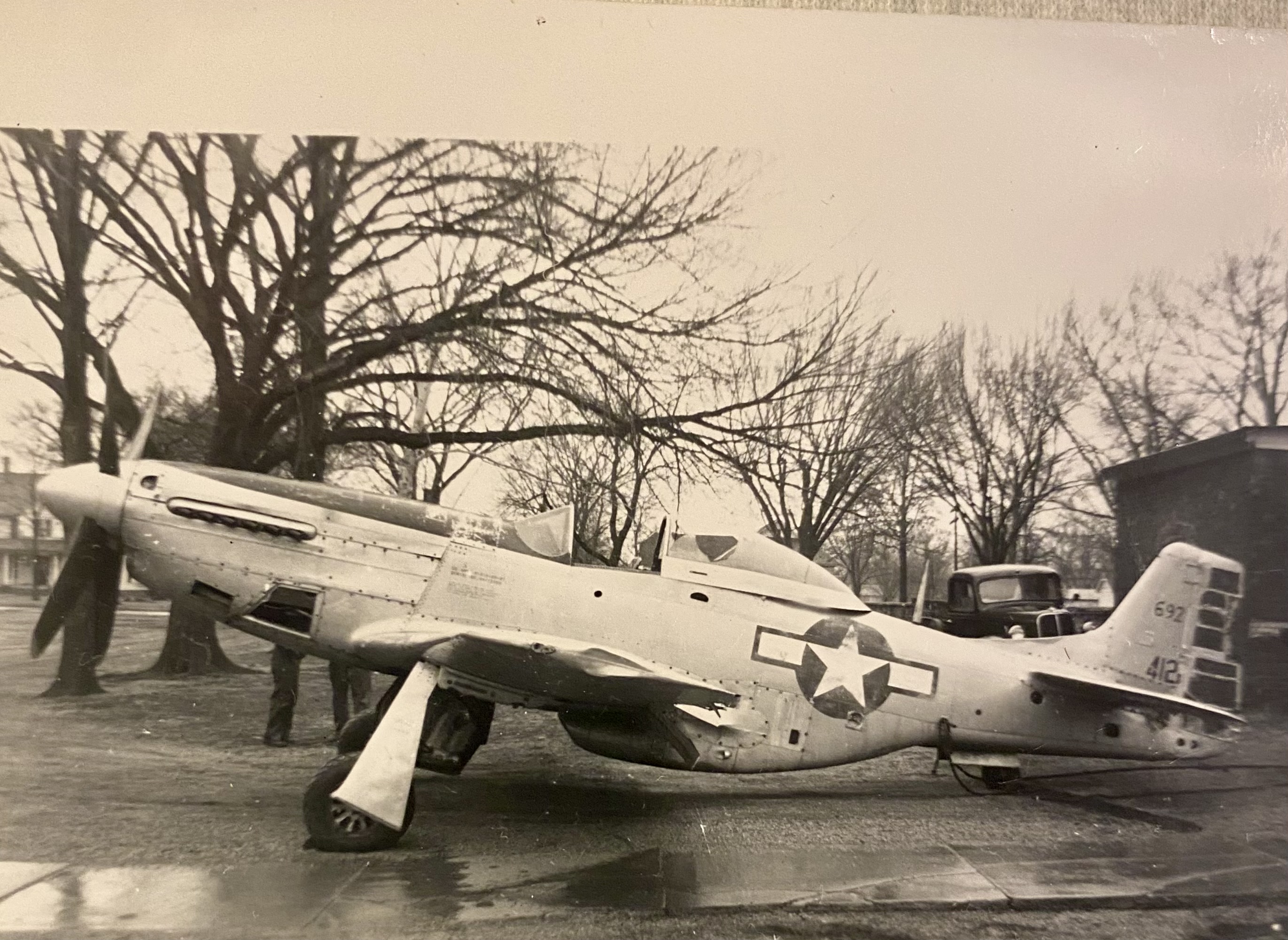
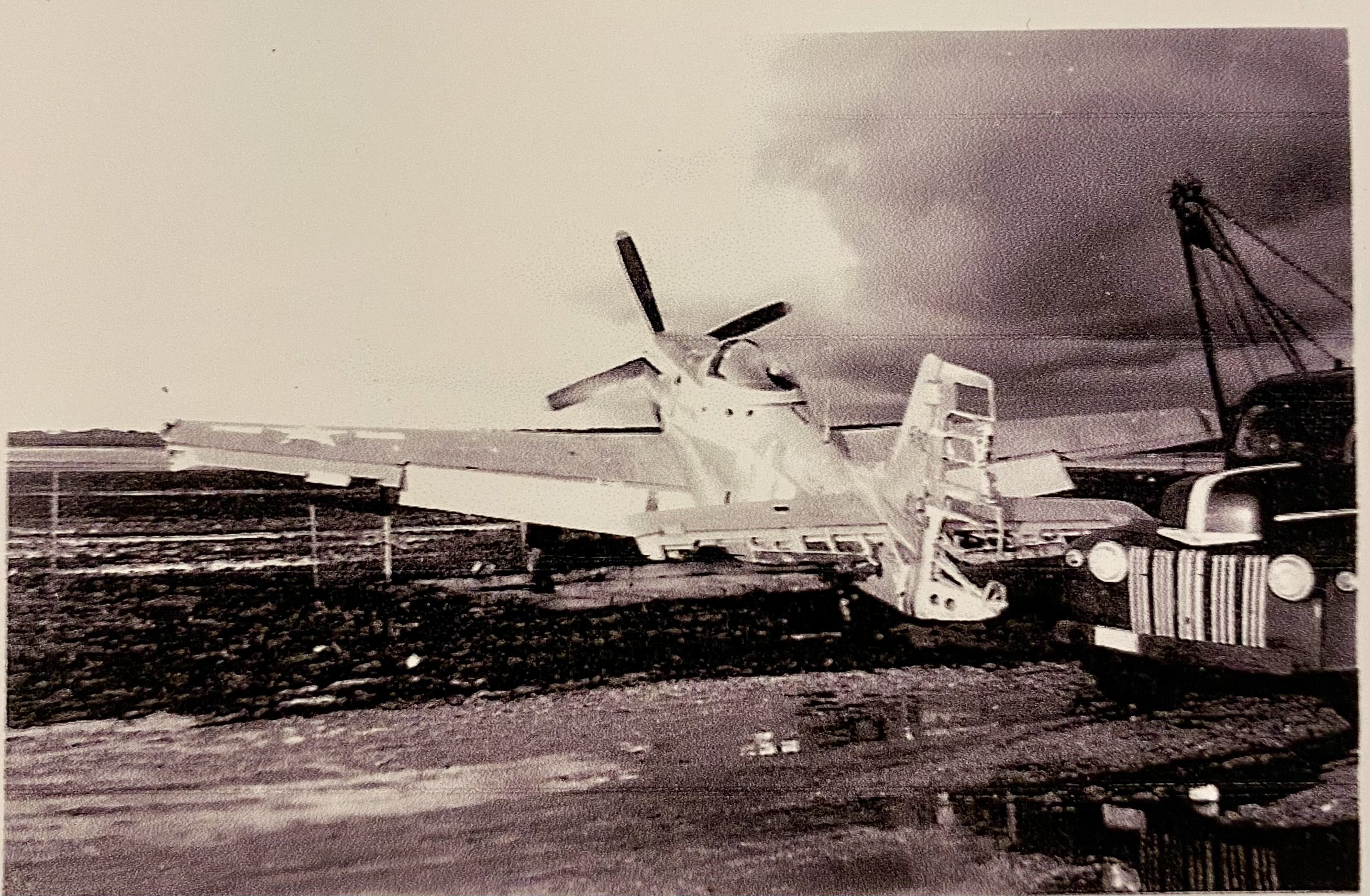
Here’s a short history:
From Training Field to Kansas Park:
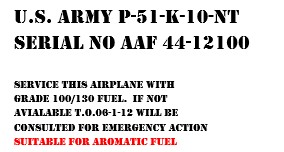
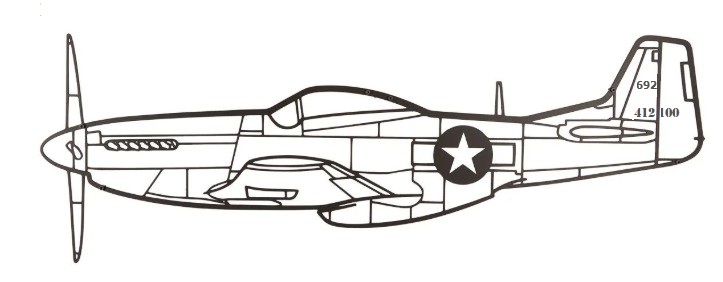
The Military and Postwar History of P-51K-10-NT, USAAF Serial 44-12100
Abstract
This article reconstructs the service history and postwar disposition of North American Aviation P-51K-10-NT Mustang, United States Army Air Forces (USAAF) serial number 44-12100. Using the Individual Aircraft Record Card (IARC), Army Air Forces accident documentation, and postwar administrative records, the study traces the aircraft from factory acceptance in December 1944 through stateside training service, demobilization processing under Air Materiel Command, transfer to municipal custody in Pittsburg, Kansas, and eventual civilian ownership. The case of 44-12100 illustrates the administrative pathway through which surplus combat aircraft were redistributed to American communities in the immediate postwar period and contributes to a broader understanding of wartime training administration and demobilization-era aircraft disposition.
Introduction
Although more than 15,000 North American P-51 Mustangs were produced during World War II, comparatively few can be documented through a complete archival trail from military service to postwar civilian life. P-51K-10-NT serial number 44-12100 represents a rare case in which the aircraft’s Individual Aircraft Record Card and accident documentation provide a continuous administrative record linking wartime service, postwar demobilization, municipal transfer, and civilian restoration.
This study reconstructs the operational and administrative history of 44-12100 from its acceptance in December 1944 through its transfer to Pittsburg, Kansas, in December 1946.
Factory Acceptance and Initial Assignment
P-51K-10-NT serial 44-12100 was accepted by the USAAF on December 22, 1944, at North American Aviation’s Dallas, Texas facility (U.S. Army Air Forces 1944a). The aircraft was listed as available at Meridian, Mississippi, on December 25, 1944, and delivered to Key Field, Meridian, Mississippi, on December 27, 1944 (U.S. Army Air Forces 1944a). A handwritten annotation confirms physical arrival at the assigned unit on January 1, 1945.
Key Field functioned as a major fighter training installation. Record card entries referencing Second Air Force training structures and the Single Unit Transition Training Program (SUTTP) confirm that 44-12100 was employed as a stateside fighter transition aircraft rather than deployed to a combat theater (Second Air Force 1944–45; U.S. Army Air Forces 1944a).
Accident and Configuration — March 6, 1945
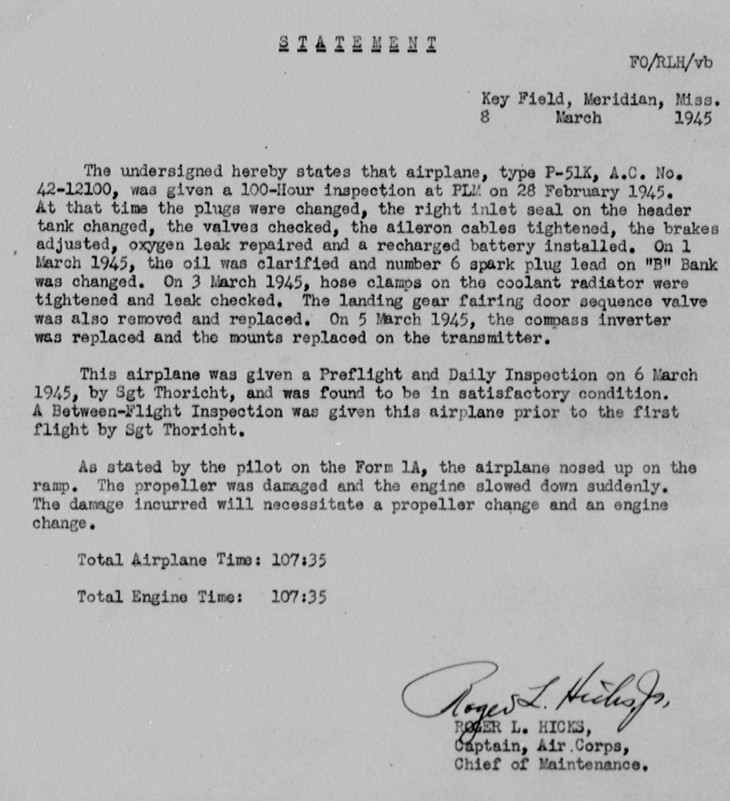
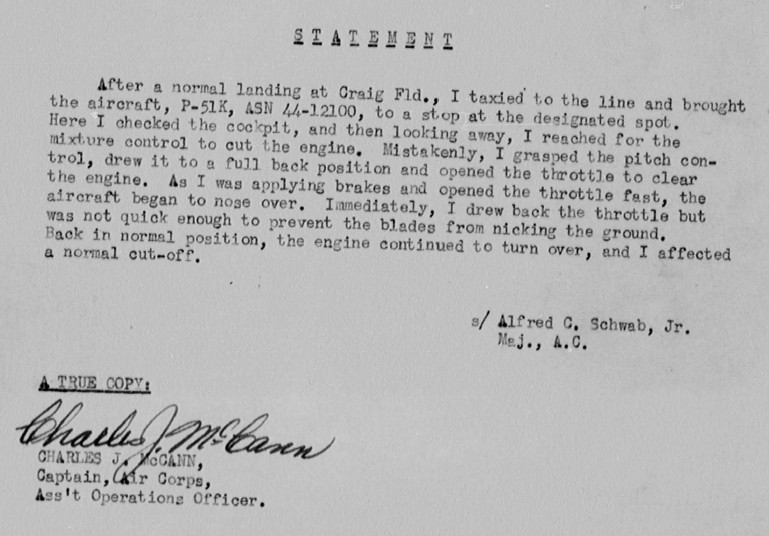
On March 6, 1945, P-51K-10-NT serial 44-12100 was involved in a propeller strike at Key Field, Meridian, Mississippi (Station 4549). The incident is recorded as AAF Accident No. 45-3-6-24 (U.S. Army Air Forces 1945).
The accident report identifies the pilot as:
- Major Alfred C. Schwab, Jr.
Service Serial Number 0-727560
The passenger was:
- 1st Lt. Manual C. Soares
Service Serial Number 0-756419
Both officers were assigned to Key Field, Combat Crew Training Squadron (CCTS) (TR) at the time of the accident (U.S. Army Air Forces 1945). The report also identifies the assigned crew chief as Sgt. H. P. Thoricht, confirming that the aircraft was fully integrated into the training unit’s maintenance structure.
At the time of the accident, the aircraft was powered by a Packard-built Rolls-Royce Merlin V-1650-7, engine serial number V-329844, and had accumulated 107 hours and 35 minutes of total airframe time (U.S. Army Air Forces 1945). The relatively low time indicates that the aircraft was still early in its operational life, consistent with its December 1944 acceptance.
The propeller strike required replacement of both engine and propeller assembly. The aircraft was repaired and returned to service rather than written off.
The accident report further records Lt. Soares’s statement that he was riding as a passenger and that the aircraft had no controls in the rear cockpit (U.S. Army Air Forces 1945). This strongly indicates that 44-12100 had been modified with a rear passenger seat during training service but lacked dual flight controls. The Individual Aircraft Record Card briefly classified the aircraft as “TP-51K,” but a subsequent notation marked this designation “IN ERROR TP-51K,” suggesting that the aircraft was not formally redesignated as a factory two-place trainer (U.S. Army Air Forces 1944). The evidence points to a local field modification rather than a formal model change.
The accident report lists the reporting chain as Third Air Force, subcommand Third Tactical Air Division, reflecting the command jurisdiction responsible for accident reporting at the time (U.S. Army Air Forces 1945). The appearance of Station Number 4549 on both the accident report and the IARC voucher entries further confirms the consistency of the administrative trail.
Postwar Reassignment and Demobilization
The Individual Aircraft Record Card lists the aircraft as available at Hobbs Army Air Field, New Mexico, on January 3, 1946 (U.S. Army Air Forces 1944). Hobbs served during the demobilization period as a redistribution and processing installation under Air Materiel Command (AMC) authority (Air Materiel Command 1945–47).
Administrative codes appearing on the record card—including AFAMC, DASR, BASUT, ASSX, BASSA, and associated voucher numbers—reflect redistribution and surplus authorization procedures rather than operational flying assignments (U.S. Army Air Forces 1944a; Air Materiel Command 1945–47). These entries document the aircraft’s movement through formal demobilization channels.
Transfer to Pittsburg, Kansas
The record card contains the decisive entry:
“To Pittsburg, Kansas — 12-28-1946.”
(U.S. Army Air Forces 1944)
This confirms official transfer from USAAF control to municipal custody on December 28, 1946. During 1946–1947, the War Assets Administration distributed surplus military equipment—including combat aircraft—to municipalities for memorial display (War Assets Administration 1946–47).
Subsequent administrative notations, including “WASSA” and “WAACOLUMHT,” indicate War Assets processing and later civilian disposition associated with Columbus and the Horton family (U.S. Army Air Forces 1944).
Discussion
Unlike many Mustangs in adjacent serial blocks that were transferred overseas to allied air forces, 44-12100 remained entirely within the continental United States. Its documented pathway—stateside training service at Key Field, accident and repair (AAF Accident No. 45-3-6-24), redistribution through Hobbs AAF, surplus authorization, and municipal transfer—represents a classic administrative trajectory for surplus fighter aircraft in the immediate postwar period.
The evidence of a rear passenger cockpit without controls further illustrates the flexibility of stateside training modifications and highlights the occasional divergence between field configuration and official model designation.
Conclusion
Primary documentation establishes that P-51K-10-NT serial 44-12100:
- Served exclusively within the continental United States during World War II
- Sustained and recovered from a documented propeller strike at Key Field (Station 4549) on March 6, 1945
- Carried a V-1650-7 engine (V-329844) at the time of the accident with 107:35 total airframe time
- Was processed through Air Materiel Command demobilization procedures
- Was transferred to Pittsburg, Kansas, on December 28, 1946
- Entered civilian ownership through War Assets Administration channels
The Individual Aircraft Record Card and accident report together provide a rare, continuous administrative record linking wartime training service to municipal display and later civilian restoration.
References
Air Materiel Command. 1945–47. Demobilization and Redistribution Procedures. Administrative records.
Second Air Force. 1944–45. Single Unit Transition Training Program Records. Training documentation.
U.S. Army Air Forces. 1944a. Individual Aircraft Record Card for P-51K-10-NT, Serial 44-12100. Archival document.
U.S. Army Air Forces. 1945. Aircraft Accident Report: Key Field, Mississippi (Station 4549), AAF Accident No. 45-3-6-24, March 6, 1945, Serial 44-12100. Archival document.
War Assets Administration. 1946–47. Municipal Surplus Aircraft Allocation Records. Federal administrative records.
Personnel Context
Major Alfred C. Schwab, Jr. (0-727560)
Major Alfred C. Schwab, Jr., the pilot of P-51K-10-NT serial 44-12100 at the time of the March 6, 1945 accident, was an officer in the United States Army Air Forces during World War II. Contemporary records place him at Key Field, Meridian, Mississippi, assigned to a Combat Crew Training Squadron (CCTS) under Third Air Force jurisdiction at the time of the incident (U.S. Army Air Forces 1945).
Postwar records indicate that Alfred C. Schwab, Jr. continued military service following World War II and later served in the Air National Guard. He ultimately retired with the rank of Brigadier General and was involved in the establishment of the Minnesota Air National Guard Museum. His long postwar aviation career places his service at Key Field within a broader trajectory of professional military aviation (Legacy.com obituary, Alfred C. Schwab Jr., 2007).
First Lieutenant Manual C. Soares (0-756419)
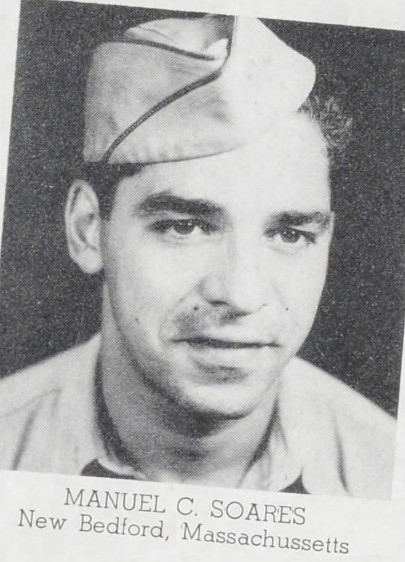
First Lieutenant Manual C. Soares was the passenger aboard 44-12100 during the March 6, 1945 propeller strike incident at Key Field (U.S. Army Air Forces 1945). Public memorial records indicate that Soares was born on May 20, 1919, and died on December 20, 2007, and is interred at Forest Lawn Memory Gardens in Meridian, Mississippi, consistent with his wartime station. He served as a 1st Lieutenant in the United States Army Air Forces during World War II, and his presence in the accident report confirms his active role in stateside training operations.
William P. Horton
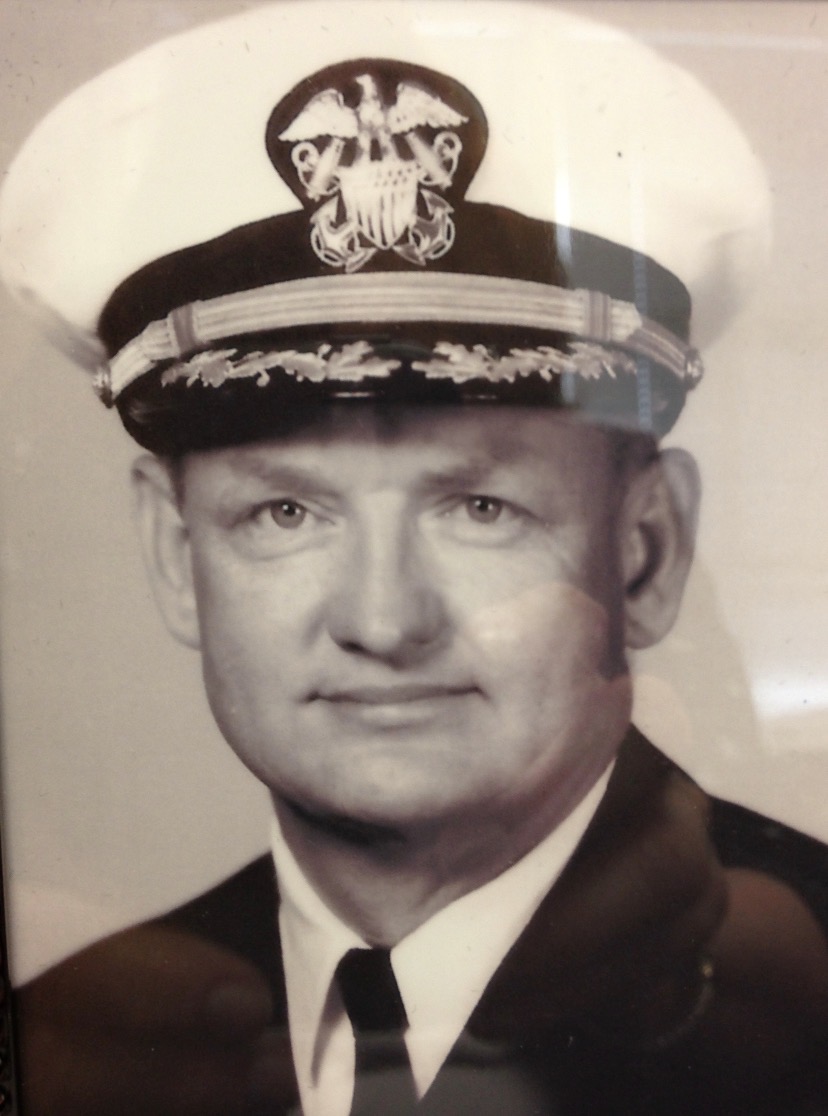
William P. “Bill” Horton, 86, of Salina, died Tuesday April 5, 2011. He was born Dec. 19, 1924, in Iola, the son of Benjamin and Thelma (Park) Horton. Bill worked as an electrical engineer and owned and operated Mid-States Armature Works for 47 years, retiring in 1999. He was a pilot in the United States Naval Reserve during World War II and retired as commander after 30 years of service. He served as board member of the Salina Airport Authority, Asbury Hospital, St. John’s Military School and Kansas Wesleyan University. He was a charter member of Trinity United Methodist Church. He was a member of the Royal Order of Jesters, the Ancient and Secret Order of Quiet Birdmen and recipient of the Wright Brothers Award in 2006. He attended Pittsburg State University and graduated from the University of Kansas with a degree in aeronautical engineering. Bill was preceded in death by his parents and two brothers, Joseph and Frank Horton. Survivors include his wife, Wanda Horton, of Salina; one son, Bill Horton and wife Margie, of Derby; one daughter, Michele Horton, of Derby; and two grandchildren, Katie Horton, of Wichita, and Beth Horton, of Derby.
 Stinson Station Wagon, NC9391K Restoration