
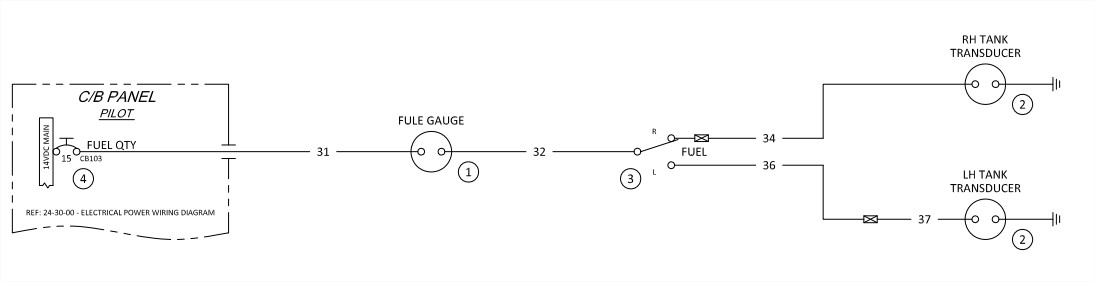
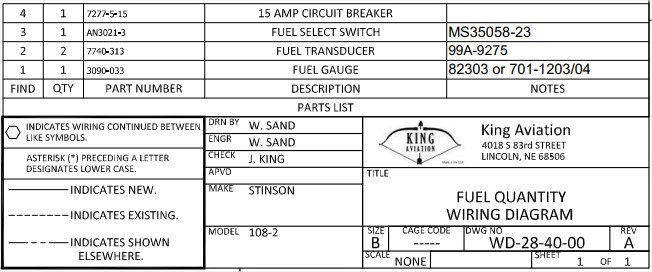
It’s a simple, decades old system that works well. When it works. Some say it’s from General Motors, but the sending unit is a Ford unit. I’m told it’s from a 1938 Ford truck and you can buy the sending unit off a Ford Restoration website for around $43.00 (Part #: 99A-9275).
The Stinson fuel sending unit mounts on the bottom of the fuel tank while the Ford sending unit mounts on the top of the tank. So full fuel in the Ford means low resistance from the sending unit .
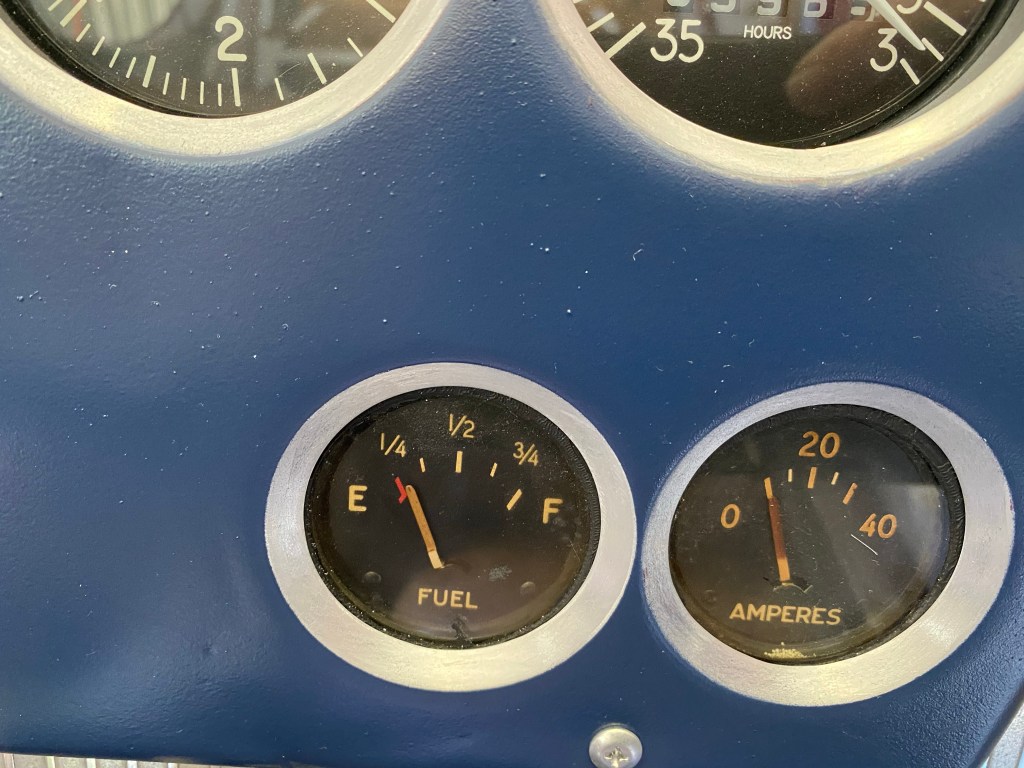
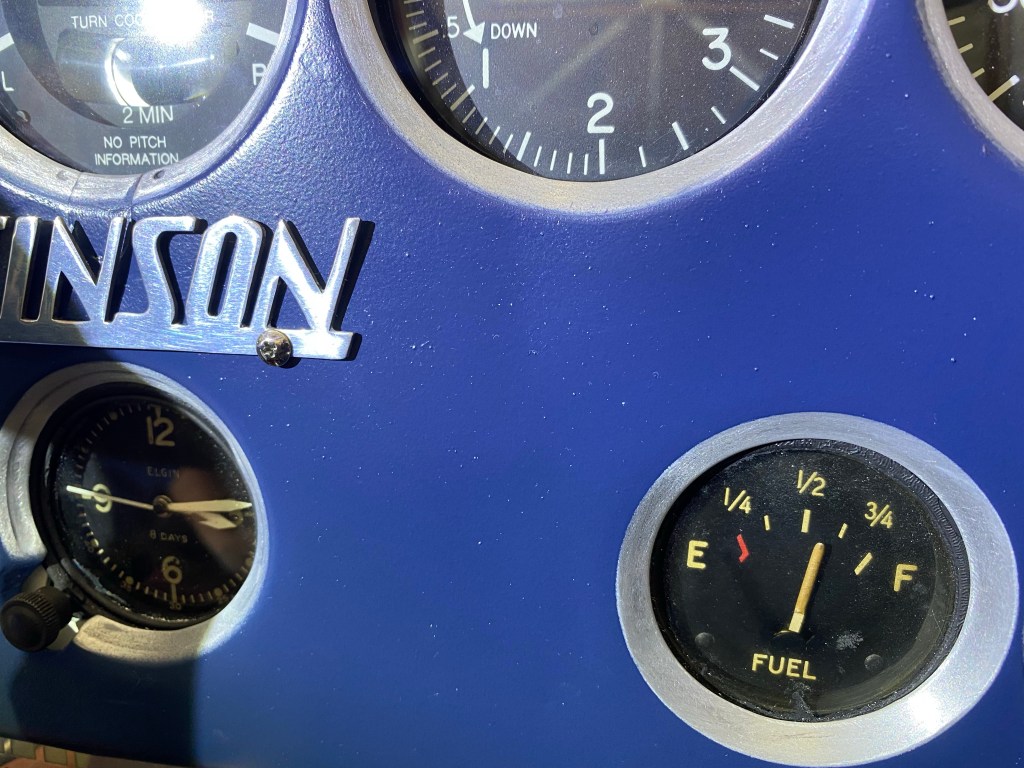
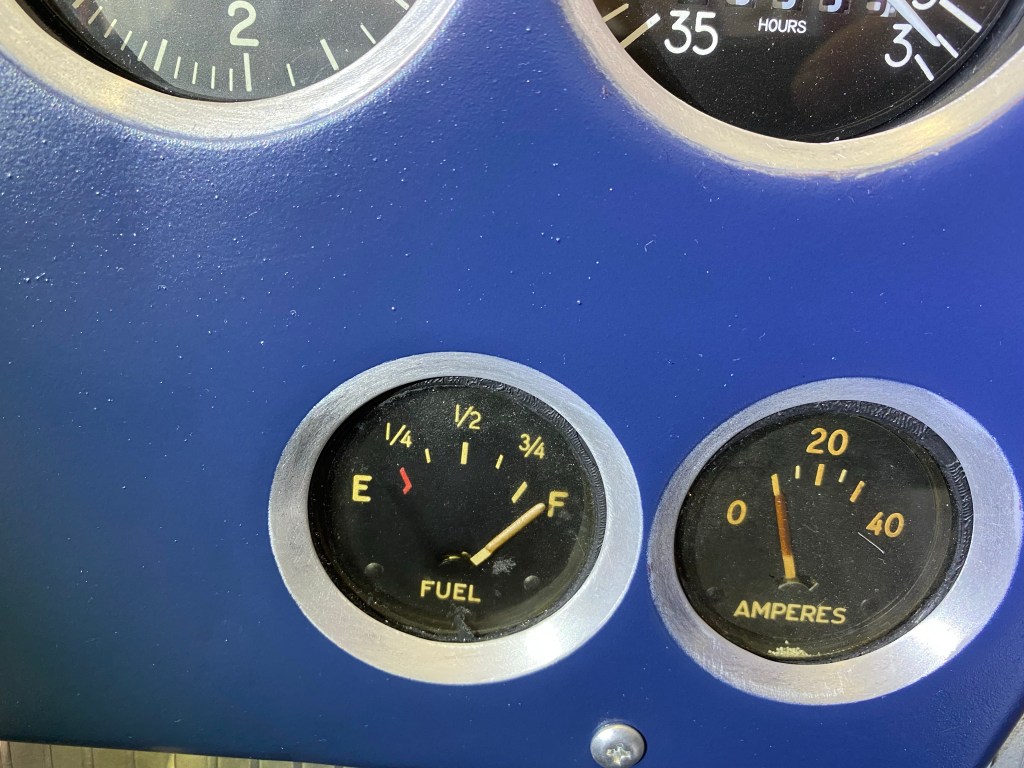
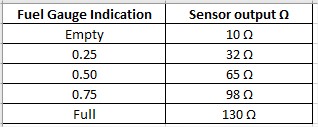
In the Stinson, it’s opposite due the sending being mounted upside down. Low or a short indicates empty and high resistance indicates fuel fuel.
The Ford sending unit linked above shows 125-135 Empty, 17-19 Full, so turning that unit up-side-down you will have 17-19 Empty and 125-135 Full. Seems about right with this Stinson.
Some Stinson webpages show it wrong, but Larry Wheelock’s post is correct. At least for this Stinson , this is how it works.
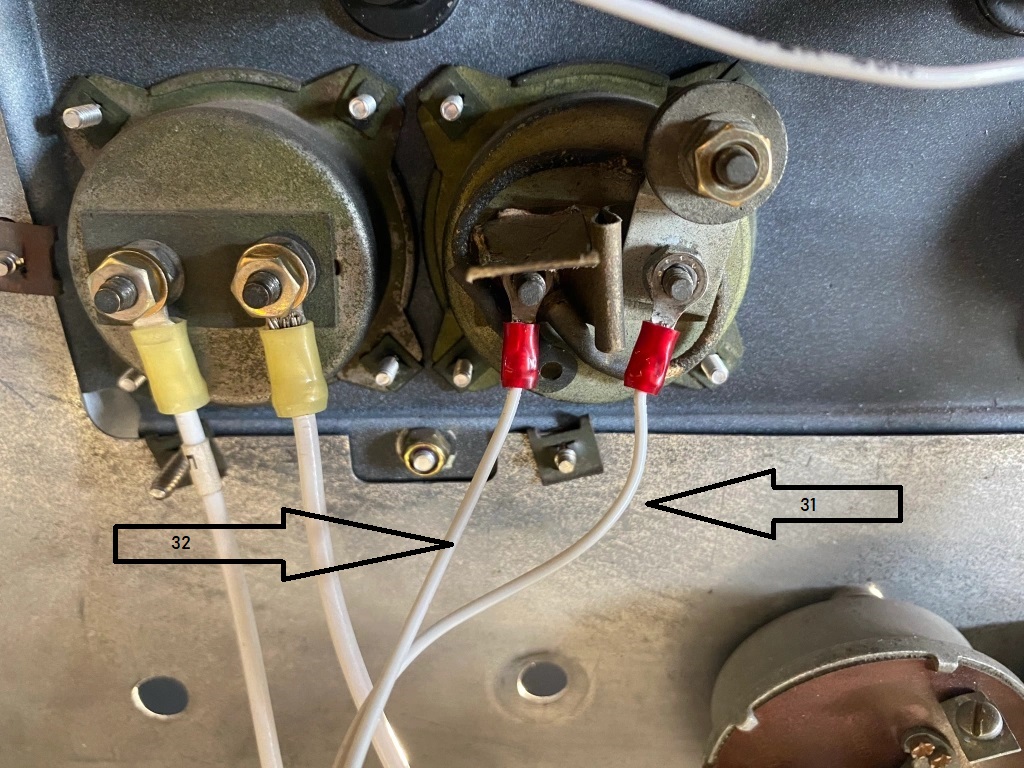
The gauge has three posts. Two are on the right side of the gauge as you view from the rear of the gauge and one post on the left. I’ve read that one post is for 6v systems and one for 12v systems. I connected it to the bottom post for 12v.


 Stinson Station Wagon, NC9391K Restoration